Baseball Coaching Sheet: Your On-Field and Off-Field Scorekeeping Companion
Keeping score at a baseball game isn't just about tallying runs. It's a way to capture the rhythm of the game—the stolen bases, the double plays, the rallies that shift momentum in a single inning. A baseball coaching sheet turns those fleeting moments into something you can revisit, analyze, and share. Whether you're a coach looking for a clear record of player performance, a parent tracking your child's progress, or a dedicated fan who loves the craft of scorekeeping, having the right tool changes everything.
These aren't generic notepads. The baseball score sheets we're discussing are carefully laid out to give you plenty of room for both teams, with dedicated spots for hits, runs, and the plays that tell the real story. They're designed by people who understand that scorekeeping happens in dugouts and bleachers alike—places where simplicity and clarity matter just as much as detail.
Why a Dedicated Score Sheet Beats Scratch Paper Every Time
You've probably tried keeping track on a phone notes app or the back of a program. It works for about two innings. Then substitutions happen, a wild pitch sends runners scrambling, and suddenly your notes are a mess. A structured baseball coaching sheet gives you a consistent framework. Each batter's at-bat gets its own flow, the diamond diagram lets you mark advancements, and the inning-by-inning layout prevents you from losing track when the game speeds up.
Coaches especially benefit from this kind of record. After the game, you can look back and see whether a player is consistently pulling the ball, struggling with two strikes, or reaching base in key situations. That's the difference between coaching on memory and coaching on data you can actually use. With 120 pages in a single book, you have enough sheets for an entire season and then some—no more scrambling to find a printable template the night before a tournament.
How Coaches Turn Game Data into Better Practices
Picture a travel ball coach on a summer Saturday. You're juggling lineups, pitch counts, and defensive rotations. During the game, you mark each play quickly: 6-3 groundout, line drive to left, sacrifice bunt. That night, you flip through the baseball coaching sheet pages and notice a trend—your cleanup hitter keeps chasing high fastballs with runners in scoring position. Without that record, you might only remember the one hit he got, not the three pop-ups. Now you can adjust his batting practice reps, focusing on patience and zone awareness.
For pitching coaches, the notes section is invaluable. After each inning, you can jot down velocity drops, location issues, or signs of fatigue. Over multiple appearances, patterns emerge. Did a pitcher's mechanics change after 60 pitches? Did he struggle the third time through the order? The space on each sheet accommodates these quick observations without crowding the scorekeeping grid, so nothing gets lost in the margins.
Parents and Fans: Building a Richer Game-Day Connection
Scorekeeping isn't just for professionals. When you're in the stands as a parent, keeping score keeps you tuned into every pitch. You might start tracking your child's at-bats: how many times they hit to the opposite field, how often they walk, their reaction after a strikeout. Over the course of a season, that baseball score sheets book becomes a personal highlight reel. You'll know they broke out of a slump during that Tuesday night game under the lights, the details preserved in your own handwriting.
Fans of the game often find that keeping score deepens their understanding. You start to notice the strategy: when a manager pinch-hits, why a team shifts its infield, how a pitcher sets up a batter. The baseball coaching sheet layout gives you a balanced view of both teams, so you can follow the entire game rather than just your own rooting interest. It's a quiet, focused way to watch baseball—something that feels increasingly rare in a world of constant digital distractions.
Teaching the Game to the Next Generation
Many coaches and parents use these score sheets as teaching tools. Give a young player a sheet and ask them to track the game while sitting on the bench. They'll learn the positions, the scoring symbols, and the flow of the game much faster than by hearing a lecture. When they ask, "Why did you mark that a fielder's choice?" you get a chance to explain decision-making in real time. The baseball coaching sheet becomes a hands-on learning aid, not just a recording device.
For youth leagues, this can also be a bonding activity. Scorekeepers often become informal team historians. Kids flip through the book during rain delays, reliving that game where Tommy hit a grand slam or the time they turned a triple play. Those stories get anchored to something tangible.
From the Dugout to the Print Shop: Making the Sheets Work Your Way
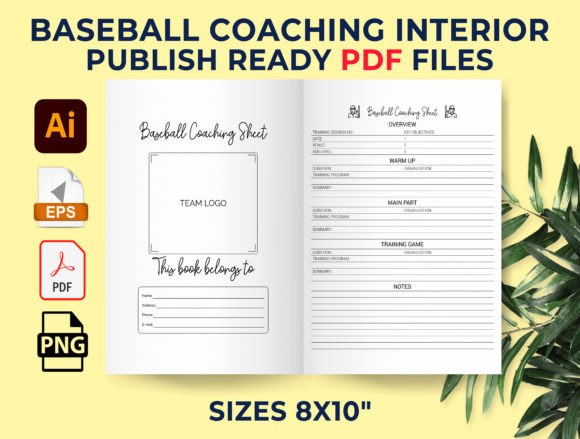
One size rarely fits all, and that's where the digital format of these baseball score sheets gives you real flexibility. The files come as a high-resolution print-ready PDF at 300 DPI, which means every line and label prints crisp and clean, no fuzziness even when you blow them up. The 8" x 10" dimensions fit standard binders, clipboards, and folders without awkward trimming. Since it's a full 120-page book layout, you can print the entire thing at a local shop, use just the pages you need, or even add your team's logo to the intro page before printing.
The baseball coaching sheet interior files are already KDP-tested, so if you decide to self-publish a custom version for your league or sell your own branded scorebook, you won't run into formatting errors. That's a huge time-saver. You can generate a clean paperback without wrestling with margins or bleed settings. For teams that want to customize further, the included AI, EPS, and PNG files let you tweak colors, add sponsor logos, or adjust fields for softball versus baseball rules without starting from scratch.
Who Gets the Most Out of a 120-Page Scorebook?
The obvious answer is baseball and softball coaches. But it goes beyond that. Fantasy baseball enthusiasts have turned to old-school scorekeeping as a way to follow multiple games simultaneously, tracking key at-bats for the players on their roster. Summer camp counselors can print a handful of sheets for each game, letting campers take turns keeping score and learning responsibility. Adult recreational leagues—where stats often get forgotten by the next week—benefit from having a physical record of the season, especially when someone's chasing a friendly batting title.
Small business owners who sponsor local teams sometimes use customized versions of these sheets as a promotional item. Print a stack with your company logo, hand them out at tournaments, and you've given parents something they'll actually use instead of another koozie. The unique design and ample note space make them more appealing than a slim shopping-list notepad.
Even bloggers and content creators who cover baseball find a use. Draft your game recap directly on the sheet during play, take a photo of your scorecard, and share it alongside your post. It adds authenticity and a personal touch that a box score from a website can't replicate.
What to Look for Before You Print or Publish
Before you run off a hundred copies, think about how you'll actually use the sheets. If you're a coach who needs to review the game between innings, you'll want the note-taking space that this design provides—some score sheets cram everything so tight you can barely fit a number, let alone a comment. With these pages, the balance between tracking and note space is deliberate. You can record the standard play notation and still have room to write "batter flinched on curveball" or "RF took bad angle to ball." Those marginal notes are often the most valuable data you collect.
Print quality matters. The 300 DPI resolution ensures lines stay sharp even on lighter paper, but if you're printing at home, test a sheet first. Many people prefer a slightly heavier paper stock that holds up to erasing and doesn't allow ink to bleed through. The no-bleed format means you won't lose any content to page edges, which is critical when you're trying to fit an entire nine-inning game onto two facing pages. If you're binding the sheets into a book, a spiral or wire-o binding works best for laying flat on a dugout bench or a lap in the bleachers.
Consider how many games you'll realistically track. 120 pages covers a lot of baseball—at least 30 full games if you use one side per game, more if you track on both sides. For a travel team playing 50-plus games a season, that's a solid chunk. You can always print additional copies, so you never run out mid-tournament. That flexibility is a big advantage over a pre-printed, permanently bound scorebook you buy once and fill.
Bringing It All Together on Game Day
The real test of any baseball coaching sheet happens in the moment, with a batter stepping in and the crowd buzzing. You glance down, find the slot for the leadoff hitter, and mark a crisp "5-3" as the third baseman makes the throw. The next batter works the count, and you fill in the balls and strikes. Before long, you're in a rhythm, capturing the game's pulse. That rhythm is only possible when the design gets out of your way—when you're not straining to read tiny boxes or second-guessing where to put a stolen base notation.
After the final out, the sheet doesn't go in a drawer. It becomes a reference, a memory, a coaching checkpoint. Maybe you'll scan it and send it to a player who's working on plate discipline. Maybe you'll compare it to the previous game against the same opponent. Maybe you'll just look at it years later and remember exactly how that season felt. That's what good scorekeeping offers, and it starts with a well-designed sheet that respects the game's details.