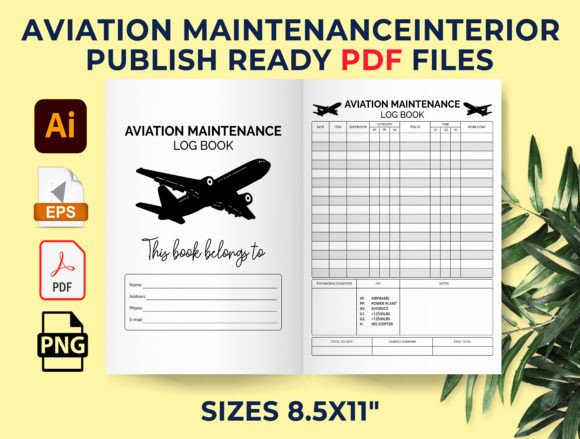
Aviation Maintenance Log Book: A Structured Approach to Precision Record-Keeping
In aviation, every torque value, fluid change, and inspection finding carries weight. A single missed entry or smudged note can cascade into costly rework—or, far worse, compromise safety. The Aviation Maintenance Log Book exists to eliminate that risk, offering a meticulously designed framework for mechanics who treat documentation as seriously as the work itself. This isn’t a generic notebook; it’s a purpose-built tool shaped around the daily rhythm of an aircraft technician, blending generous page dimensions, intelligent formatting, and a clean architecture that keeps critical information accessible at a glance.
Why Documentation Discipline Separates Good Mechanics from Great Ones
Aviation authorities worldwide mandate traceable maintenance records for a reason. Beyond regulatory compliance, a well‑kept log transforms a mechanic’s daily output into a continuous narrative of an aircraft’s health. When you record tasks in a consistent per‑day format, you create more than a legal safeguard—you build a diagnostic resource. Patterns emerge across weeks of entries. That subtle increase in vibration, the shortening interval between parts replacements, the note about a specific torque wrench used: all of it forms a story that makes troubleshooting faster and more accurate.
Many professionals rely on a patchwork of loose sheets, sticky notes, and digital apps that don’t talk to each other. The Aviation Maintenance Log Book solves this by centralizing everything into one intentional volume. Because it uses a simple tracking system with dedicated space for notes, mechanics can capture contextual details that digital checkboxes often discard. Was the hangar unusually cold during that rigging adjustment? Did a colleague offer a second opinion on a clearance measurement? Those annotations become invaluable over time, especially when reviewing work months or years later.
The Quiet Pivot Back to Intentional Physical Logs
It might seem counterintuitive in an era of cloud‑based fleet management software, but many skilled technicians are rediscovering the value of a tangible maintenance log. No login screens, no battery anxiety, no compatibility issues between software revisions. A physical book sits on the bench, ready to receive a pen stroke immediately. The Aviation Maintenance Log Book meets this modern need with a twist: while designed as a physical notebook, it originates from a high‑resolution print‑ready source that guarantees consistency across every copy. That means the crisp grid lines, the generous note margins, and the uncluttered layout reproduce perfectly, whether you print one copy for personal use or produce a batch for an entire maintenance crew.
This hybrid thinking—digital source files made for physical use—reflects a larger trend. Independent aircraft restorers, flight school maintenance departments, and even corporate aviation teams are blending digital storage with analog daily logs. The digital part keeps the records searchable and backed up; the handwritten part provides immediacy and a human touch that often includes sketches, torque-pattern diagrams, or simple observations that don’t fit neatly into a dropdown menu.
What Separates a Truly Useful Log Book from a Blank Notebook
Blank notebooks work for journaling, but aviation maintenance demands a different level of intention. The right layout reduces mental friction. When a mechanic opens a page in this log book, they immediately see a per‑day structure that mirrors a typical shift: start of day checks, work performed, parts consumed, signatures, and a dedicated area for notes that don’t fit elsewhere. There’s no need to draw columns by hand or guess where to write tomorrow’s entry.
Several design choices make this book stand apart:
- Dimensions set at 8.5″ x 11″ inches – Large enough to hold detailed entries without feeling cramped, yet perfectly sized for standard binders, clipboards, and tool‑cabinet drawers. That page real estate matters when you’re documenting a lengthy engine inspection or listing multiple airworthiness directive compliance steps.
- 120 pages of no‑bleed layout – Ink stays put, even with heavy marker use on the opposite side. There’s nothing worse than notes ghosting through a thin sheet and muddying a previous day’s record. The no-bleed design keeps each day’s work visually isolated and clean.
- Intro page for context – A short, customizable starting section lets you label the book with aircraft registration, engine type, or the mechanic’s name and certification details. That turns a stack of similar-looking books into an instantly identifiable reference set.
- Simple tracking that respects the mechanic’s time – Rather than overwhelming grids, the format uses intuitive check boxes, hour-meter fields, and delineated spaces. Completing a daily log entry should take minutes, not become a second job.
- Unrestricted note space – Sometimes a log calls for a quick sketch of a crack location, a reminder about an upcoming service bulletin, or a note that a certain part number supersedes another. The design preserves open area precisely for this kind of technical annotation.
High‑Resolution Print Quality That Honors Your Work
When documentation might be scrutinized by an FAA inspector, an insurance adjuster, or a future owner, readability is non‑negotiable. The Aviation Maintenance Log Book source files are set at 300 DPI high resolution, ensuring that every line, header, and number prints with exceptional sharpness. This isn’t a photocopied template that degrades after multiple print runs. Whether output as a physical book or used to generate clean PDFs for digital records, the clarity remains consistent. Mechanics who have experienced the frustration of fuzzy grid lines or broken fonts in other logbooks will immediately appreciate the difference a genuine high‑resolution master makes.
This attention to print readiness also serves the growing community of independent publishers and content creators. Because the design arrives as a tested KDP‑ready PDF with no errors, it can be uploaded directly to print‑on‑demand platforms without reformatting. Creators, educators, and aviation bloggers who want to offer their audience a professional‑grade maintenance log can do so seamlessly, adding their branding or a short foreword if desired. The inclusion of AI, EPS, and PNG files extends that flexibility into graphic design workflows, allowing full editing of individual elements while preserving the overall architecture.
Who Gains the Most from a Dedicated Aviation Maintenance Log Book
While built for licensed A&P mechanics, the book’s utility radiates outward to several related fields. Aviation maintenance students benefit enormously from learning proper documentation habits early. Instead of scrawling notes on loose paper, they internalize the discipline of filling out a structured log—a practice that will follow them into every hangar they ever work in. Flight school fleet managers, responsible for multiple aircraft with staggered maintenance schedules, can use one book per aircraft to keep histories clean and separated. Even homebuilt aircraft builders and restorers of vintage planes find the format a perfect match for their meticulous project tracking.
What ties these users together is a shared need for traceability without complexity. Electronic systems often introduce layers of menus and mandatory fields that don’t apply to every situation. The analog logbook adapts to the task at hand. One day’s entry might record a full Phase 4 inspection on a turbine aircraft; the next might simply log an oil top‑off and a visual walkaround. The format flexes without becoming a burden.
Designing a Daily Habit That Prevents Costly Oversights
Human factors research consistently shows that the act of writing improves retention and reduces error rates in procedural tasks. When a mechanic physically writes down a torque value or confirms a part number, the action reinforces memory. The per‑day format of this logbook encourages—but doesn’t force—that habit. Each morning, flipping to a fresh page signals a cognitive shift into work mode. By the end of a shift, a completed page offers a tangible sense of closure and a clear record of what was accomplished.
The book’s generous size intentionally discourages overcrowding. Multiple smaller tasks can coexist on a single page without bleeding into tomorrow’s space. A mechanic can jot down the serial number of a replaced component, the reason for removal, and the time spent—all in a logical flow that anyone else picking up the log can understand. That transparency is vital when handing off an aircraft between shifts or communicating with a lead inspector.
From Single Mechanic to Scalable Resource
Because the source material comes in multiple editable formats, the log book adapts to scaling needs. A mobile aircraft maintenance service might print a small batch of branded logbooks to leave with clients after completing annual inspections. An online aviation educator might bundle the digital files with a course on maintenance documentation. The Aviation Maintenance Log Book structure withstands modification—pages can be added or removed as needed, and the no-bleed layout remains intact even when adjusting page counts for specific aircraft types.
Choosing a System That Matches Your Mechanical Standard
A casual observer might see a paper logbook and assume it’s a step backwards. But within the aviation maintenance community, experienced hands understand the difference. This isn’t about nostalgia; it’s about control. The logbook never crashes, never requires a software update mid‑log entry, and never confronts you with a blocked pop‑up when you’re trying to record a critical discrepancy. It simply works, every time, provided it’s built to the right standard.
The clarity of the 300 DPI print, the practical page dimensions, the smart per‑day format, and the deliberate inclusion of note‑taking space all point toward one goal: making accurate record‑keeping the path of least resistance. When a tool fits that seamlessly into a workflow, compliance stops feeling like a chore and starts feeling like a professional advantage.
Realistic Expectations and Sensible Adoption
No logbook, however well‑designed, replaces the need for robust maintenance procedures and technical know‑how. It does, however, reduce the administrative overhead that can distract from hands‑on work. For mechanics already drowning in paperwork, switching to a more thoughtful format can be a quietly transformative change. The per‑day structure minimizes the blank‑page anxiety that generic notebooks create; there’s always a clear guide for what to write next. Over weeks, the habit solidifies, and the log becomes a reliable co‑pilot for the maintenance process.
Teams that adopt this logbook often report an unexpected side benefit: better communication. Because the note space is generous, mechanics feel less constrained to use cryptic shorthand. Detailed notes travel across shifts more clearly, reducing the “what did they mean by this?” moments that can lead to repeated work or missed findings.
Where Smart Documentation Meets Practical Craftsmanship
The Aviation Maintenance Log Book represents a considered intersection of old‑school reliability and modern production quality. It doesn’t pretend to revolutionize aviation; it simply removes the friction from a task that absolutely must be done right. For the mechanic in the hangar, that means fewer incomplete entries, clearer communication, and a deeply professional record that stands up to any review. For the entrepreneur or content creator, it offers a ready‑to‑publish resource that meets the exacting standards of the aviation world. In both cases, the principle is the same: give people a tool that reflects the precision they bring to their craft, and they’ll use it to produce work that lasts.