Paranormal Investigation Log Book KDP Interior Guide
Getting a new self-publishing project off the ground can eat up hours before you ever upload a single file. The lure of the low‑content book market is strong — but so is the competition. A thoughtfully designed interior cuts through that noise and gives you a serious head start. The Paranormal Investigation Log Book KDP interior sits right at the crossing point of niche appeal, practical structure, and immediate upload readiness. It isn’t just a set of pages; it’s a complete, print‑tested framework that lets you publish with confidence while building a brand around the paranormal, cryptozoology, and amateur investigator crowd.
What This Log Book Interior Actually Delivers
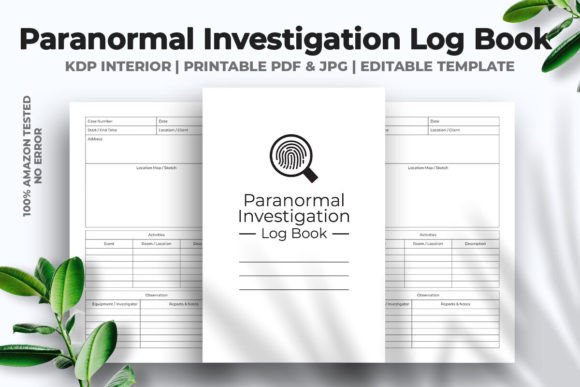
When something is tagged “100 tested on Amazon KDP no error,” it means a lot more than a quick file export. The interior has been pre‑flighted for Amazon’s print specifications, so you avoid the common heartbreak of rejections for margins, bleed, or image resolution. The file is a vector editable PDF you can open directly in Adobe Illustrator, making size tweaks painless. You get a set of 120 well‑structured pages at the popular 6 x 9 inch trim size, with no bleed to complicate layout. That 300 DPI high‑resolution JPG version gives you extra flexibility for marketing mockups, social media previews, or running your own print samples.
Key assets inside the download:
- Print‑ready PDF, uploaded as‑is without a single adjustment
- Vector editable PDF — change fonts, line spacing, or minor graphic elements in Illustrator
- 120 pages of dedicated investigation fields, checklists, and note sections
- 6″ x 9″ format, exactly what Amazon KDP loves for journals and notebooks
- Crisp high‑resolution JPG previews at 300 DPI
Personality Painted in Paper and Ink
Forget bland placeholder interiors. This one arrives with a distinct personality shaped by subtle line‑art borders, header treatments that whisper “field notes,” and a layout that nudges the user toward serious documentation. The overall impression is equal parts retro case file and modern outdoor journal. You’ll notice just enough bespoke detailing — small compass‑like icons, discrete dividers, and restrained typography choices that belong inside a research log rather than a generic notebook. The appeal is immediate for anyone who spends Saturday nights chasing flickering lights through abandoned buildings or recording EVP sessions in dusty attics.
The style leans into a slightly darker, more atmospheric feel without crossing into cheesy Halloween territory. That balance matters. Your customers range from weekend ghost hunters to thoughtful armchair enthusiasts, and the interior’s visual language respects both. The design stays clean enough for easy filling, yet carries enough mood to sell itself on a listing thumbnail.
Why a Dedicated Paranormal Log Book Works on Amazon
Niches drive low‑content sales. Broad journals face an ocean of sameness, but a log book aimed squarely at paranormal investigators, cryptid seekers, UFO watchers, or folklorists plants a flag in a smaller, hungrier market. Shoppers typing “ghost investigation journal” or “paranormal field notebook” are already looking for something tailored to their pastime. When they land on a product using this paranormal investigation log book KDP interior, they see columns for date, location, weather, equipment used, witness accounts, and analysis — the exact fields they’d scribble into a homemade notebook anyway, now elevated and organised.
The interior works as a standalone journal or as a companion piece to a series you might build. Many publishers launch multiple paranormal log books: separate editions for hauntings, cryptid sightings, psychic experiments, even ghost‑hunting equipment calibration logs. One solid interior template can spawn a small product line that feeds the same audience month after month.
Where This Interior Excels Across Publishing and Print
You could hand‑code your own interior from scratch, but the real‑world value of a ready‑made file shows up when you start juggling multiple books. The vector nature of this PDF means you can adapt it far beyond paranormal investigation. Change the thematic headers and you’ve got a field research log for ecologists, a wildlife tracker for conservation volunteers, or an adventure log for scout troops. The underlying structural logic — organised sections, consistent grid systems, space for narrative and data — translates smoothly.
Designers and content creators will also find the components useful for lead magnets. A “Sample Paranormal Case File” printable can live on a blog or behind an email sign‑up form. Coaches running paranormal exploration workshops might print a slim 20‑page booklet using selected pages. The fact that the file comes with a high‑resolution JPG opens up social media graphics without hunting for a separate mockup. Simply layer the JPG onto a book cover image in Canva or Photoshop and you immediately communicate the interior quality.
Typography, Readability, and the Subtle Art of Consistency
The typeface choices inside the log book stay true to the genre while keeping the reader’s eye comfortable during long note‑taking sessions. Header fonts lean into a slightly condensed display font with a hint of typewriter irregularity — enough to suggest fieldwork but never so decorative that it interferes with quick scanning. Body sections and entry lines rely on a straightforward modern typography approach: a clean sans‑serif that doesn’t fight for attention. That’s a smart font pairing strategy. The display face sets the mood; the practical face does the heavy lifting of legibility.
Because the PDF remains fully editable in Illustrator, you aren’t locked into the original typefaces. If your audience responds better to a more classic serif font for the narrative sections, or if you want to inject a handwritten font for personal‑notes‑only pages, you can swap and test in minutes. This kind of flexibility lets you run A/B tests on different interior styles across KDP variations, which is rare outside of fully custom design. Just remember that any change should preserve the clean hierarchy: large‑enough headers, clear separation between observation data and commentary, and consistent margins that respect the no‑bleed setup.
Building Brand Identity with a Signature Interior
A successful KDP brand isn’t about one book — it’s about recognition. When a customer buys your “Appalachian Hauntings Log” and later spots your “Midwest Creature Sighting Journal,” they should feel the same hand behind both. A thoughtfully implemented template like this Paranormal Investigation Log Book KDP interior gives you a repeatable visual language. The same border weight, icon set, and data‑to‑narrative ratio become part of your brand identity. Over time, that familiarity builds trust and keeps your books from disappearing into generic search results.
Small but intentional design moves matter: consistent placement of the page number, a recurring subtle motif (like a small moon phase indicator or anodised compass), and the use of confidentiality‑style footers that read “Field Investigation — For Internal Use Only.” These touches elevate a simple journal into something that feels official, almost archival. That emotional nudge can be the difference between a one‑time purchase and a repeat buyer who collects the entire series.
Practical Tips for Getting the Most Out of the File
Before you hit publish, run through a few quick checks that seasoned KDP publishers follow:
- Test a printed proof copy. Even though the file is 100% tested, paper choice and local print variations exist. Order an author copy and look at the alignment of the inner margins — they should be wide enough to accommodate glue binding at 6×9.
- Customise the cover to match the interior mood. The interior’s restrained, professional tone pairs best with matte covers, dark colour palettes, and imagery that feels investigative rather than purely horror. Think archived case folders, vintage camera gear, or topographic maps.
- Layer in niche‑specific prompts. Open the vector file and add three or four blank pages with guided questions such as “Describe any unexplained sensory experiences” or “Sketch the area of activity.” These small additions make the log book feel more curated and can show up in keyword‑rich product descriptions.
- Bundle variations. A single 120‑page interior can be split into a 60‑page slim field guide version for quick outings, or expanded with extra note pages for a deluxe edition. Differentiate them by cover and interior page count while keeping the core design DNA.
How This Speeds Up Your Low‑Content Publishing Flow
Time is the biggest hidden cost in KDP. One writer spent three weeks polishing a dream journal interior, only to discover a subtle margin issue that rejected the file three times. A ready‑to‑upload PDF strips that anxiety away. With the paranormal investigation log book KDP interior, you can move from idea to live listing in a single afternoon. The process collapses to: open the file, confirm the look, optionally tweak any branding details, pair it with a compelling cover, and upload. New niches or seasonal spins become practical instead of overwhelming.
Beyond Amazon, think about Etsy printables, Gumroad direct sales, or even a Kickstarter reward tier for a paranormal research kit. The editable nature of the PDF means you can also create digital‑fillable versions using form fields in Acrobat, meeting the growing demand for tablet‑compatible notebooks. A single well‑crafted interior opens up revenue streams far beyond standard KDP, especially if you’re already talking to an engaged community on social media or through a blog.
Maintaining Readability and Visual Hierarchy
A paranormal log book only works if someone can actually use it outdoors, in dim light, or while adrenaline is still pumping after an unsettling encounter. The grid‑based layout inside this interior keeps observation data front and centre. Important fields like “Time,” “Location,” and “Equipment” sit at the top left where Western readers naturally begin scanning. The generous line spacing prevents cramped handwriting, and the subtle grey dividers guide the eye without clutter. These aren’t accidental choices; they reflect design decisions tested on actual KDP prints.
The opportunity to adjust line weight and type size in Illustrator means you can prioritise readability for an older demographic that might prefer slightly larger body text. Because the file uses vector shapes, scaling up a point size doesn’t degrade quality. That alone makes it a stronger design asset than fixed raster interiors, and it strengthens the end product’s professionalism considerably.
Real‑World Use Beyond the Paranormal
The versatility of the internal structure invites creative repurposing. A consulting forensic investigator running training courses might adapt the log for evidence‑chain documentation. Historical societies documenting local legends can turn it into a public‑engagement booklet. Content creators on YouTube covering abandoned places use journals like this as merchandise that resonates deeply with their viewer base. They aren’t selling a plain notebook; they’re selling an experience wrapped in a format that feels official and immersive. When you present the product as a creative font–inspired, carefully assembled field tool rather than a simple notepad, the perceived value jumps several notches.
Ink on Paper, Files on Screen
What sets this interior apart from quick Canva compilations is the polish that comes from a decade‑plus design collective behind the file. Shoppers can sense it. They flip through the “Look Inside” preview and notice that every page feels intentional, not padded. The editorial design choices — such as alternating between full‑page note spreads and structured half‑page logs — create a rhythm that mirrors actual field work. And when you finally hold the physical book in your hand, the professional finish does half the marketing for you. Word of mouth spreads quickly inside tight‑knit paranormal communities, and a log book that feels substantial gets shown off at meet‑ups and conventions.
Whether you are a seasoned KDP publisher hunting for your next niche or a newcomer wanting to plant a flag without months of trial and error, this interior earns its place in your toolkit. It cuts through the technical noise, respects your customer’s intelligence, and gives you a foundation you can build on season after season. No hyperbole, no overblown promises — just a reliable, adaptable, and genuinely useful asset that respects both your time and your audience’s passion for the unexplained.